1. Improving poor commutation by installing or repairing commutating poles: This is the most effective method for enhancing commutation. The magnetic potential generated by commutating poles counteracts the armature reaction magnetic potential while also producing an induced potential that offsets the reactance potential caused by winding inductance, facilitating smooth current reversal. Reversing the polarity of commutating poles will intensify sparking; use a compass to verify polarity and adjust the terminals connected to the brush holder for correction. If commutator pole coils are short-circuited or open-circuited, promptly repair or replace the coils.
Adjust brush position: For small-capacity DC motors, improving commutation can be achieved by adjusting brush position. Brushes for reversible motors must precisely align with the neutral line; non-reversible motors allow minor adjustments near the neutral line. Brush deviation from the neutral line intensifies sparking. Use the induction method to reset brushes to the correct position.
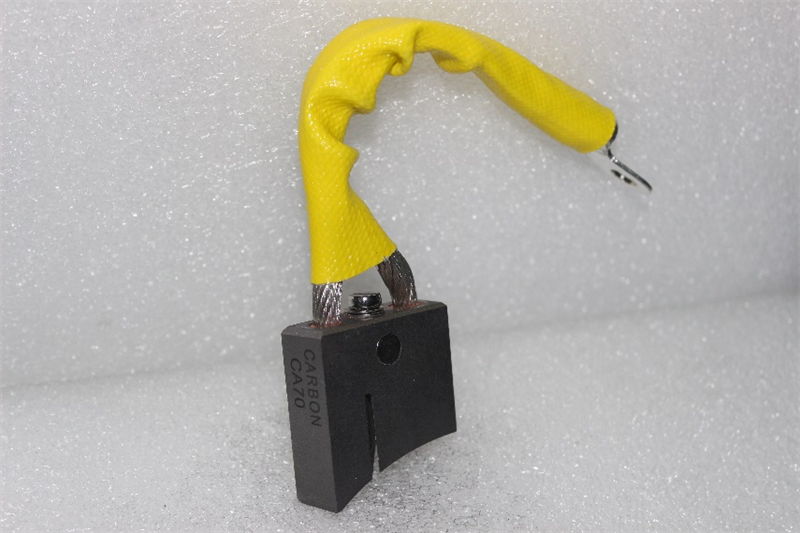
2. Addressing Excessive Current Density Prevent motor overload: Continuously monitor operating current and install overload protection devices that automatically shut off or trigger alarms when current exceeds rated values. Select motors appropriately based on load requirements to avoid using low-power motors for high-power equipment. For temporary load increases, verify motor capacity and limit operating duration.
Balance parallel brush currents: Replace brush springs with consistent elasticity to ensure uniform pressure across all brushes. Regularly clean contact surfaces between brushes and brush holders to remove oxidation and contaminants, reducing contact resistance variations. Use brushes of identical material and batch on the same holder to prevent uneven current distribution due to material differences.
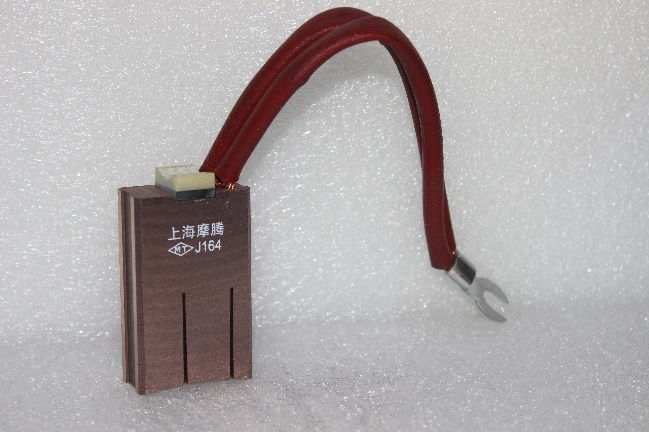
3. Optimize brush material and grade selection: Choose brushes based on motor operating conditions such as voltage, speed, and load characteristics. For high-speed, heavy-load motors, select graphite brushes with moderate resistivity, wear resistance, and excellent commutation performance. For precision motors requiring high commutation quality, opt for carbon-graphite brushes with stable contact resistance. Replace brushes promptly with appropriately graded replacements if excessive wear or commutator surface damage occurs.
Post time: Dec-22-2025